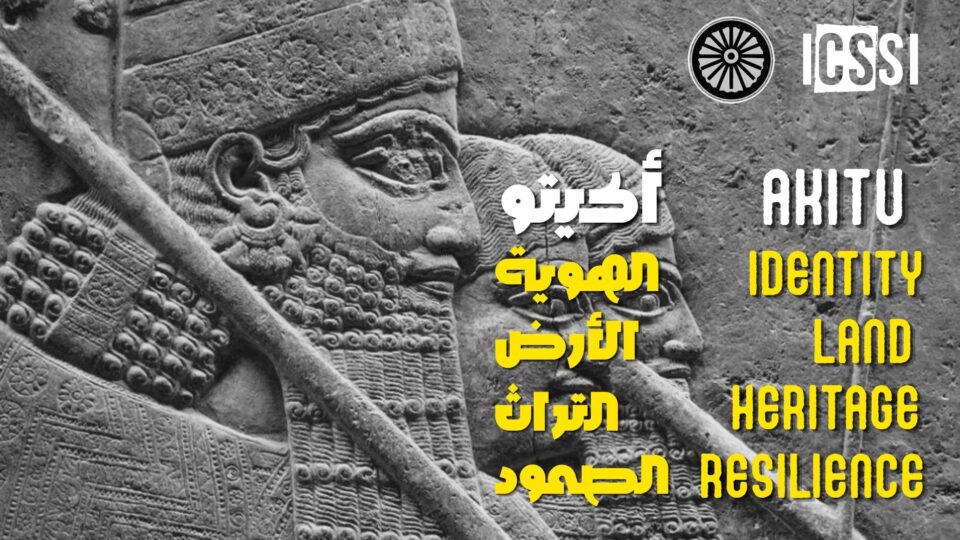
Akitu: Identity, Land, Heritage, and Resilience
Akitu has begun again this year.
To mark this new edition, we are sharing a piece emerging from a conversation between Hassan Ali Abdul Redha, ICSSI activist and photographer, and Alaa Sandouk, artist and founder of Akitu, reflecting on what Akitu means today as a living cultural practice rooted in one of Mesopotamia’s oldest celebrations.
When History Becomes a Carnival Rebuilding People and Place
What is Akitu today?
Akitu today is a living space that is constantly evolving. It is a musical-theatrical project intersecting with artistic workshops connected to the land and the environment. It started in Basra and transforms with every city and every group of participants it encounters.
Akitu is often described as a celebration of identity. What does it mean today for Assyrian, Chaldean, and Syriac communities to celebrate it? In what ways does the festival help preserve memory, language, and cultural heritage?
The idea originates from a memory of one of the oldest recorded festivals in human history, dating back over 6,776 years, associated with the cycle of life, agriculture, and the Tigris and Euphrates rivers. This historical continuity is reimagined in the present through music, theater, and collective work. Each performance carries its own character, as most of the team changes in every city it reaches.
The project evolves with time and people, taking shape from the place in which it is presented. Its identity appears as an open space for formation. Akitu’s historical roots predate current religions and nationalities, giving it the power to bring people together around a deeper sense of belonging. This space reduces divisions and opens doors for people to connect through shared experiences.
What does it mean to celebrate Akitu at a time marked by conflict, instability, and prolonged crisis? Would you say that celebrating Akitu today is also an act of resilience or resistance?
Cultural continuity transforms into a more mature vision and a broader sense of responsibility toward the place. Heritage plays an active role in the work through music, texts, and performance, where elements from the Epic of Gilgamesh intertwine with contemporary sounds within a single experience. This may even inspire producers to create films about the myths and stories of our many civilizations, contributing to cultural promotion, tourism, and new opportunities.
Language and heritage remain present throughout the process—in texts, songs, and in the transmission of experiences between participants—allowing knowledge to pass from one person to another in a living and dynamic way. (This festival carries a memory older than current divisions and has the ability to unite people around a deeper sense of belonging.)
Every detail is influenced by circumstances, yet within it exists a space where something different can happen. This space allows people to meet and work together in a shared experience, and through continuity, a clear meaning of the work emerges. In an unstable reality, the project imposes its own rhythm. In this context, Akitu can be seen as a quiet cultural act of resilience, expressed through the determination to create life and meaning under complex conditions.
What are the main challenges in organizing a festival like this in Iraq today?
Challenges exist in terms of funding, infrastructure, and support, yet participants are genuinely motivated to be part of this journey.
Do you think art can be a powerful tool for social critique and denunciation? At the same time, how can art help rebuild social ties and strengthen communities?
The carnival includes artistic workshops related to the land and environment, alongside musical and theatrical performances developed in collaboration with local artists in each city. The project engages with the place, nature, and the concept of sustainability through art. During this process, relationships form among participants, creating a shared language. This interaction carries value in itself, even before reaching a final performance, and extends to build bridges between cities and communities across the region.
The idea of organizing six carnivals annually – one celebration every two months in a different city – opens the way for a continuous cultural rhythm. This accumulation creates a language of dialogue and connection, giving future generations a wider space to participate in shaping their own future. Art here becomes a shared space for reflection, creating conditions where questions can emerge.
What role do young people play in the organization and life of the festival?
Youth are a central part of the project, participating in workshops, performances, and in shaping the experience itself. Each city opens the space for local artists and environmental activists to collaborate, integrating art with community initiatives. This interaction builds genuine networks and transforms the project into a shared space combining creativity with community engagement.
How important is it to build bridges between culture, activism, and advocacy?
Akitu is moving toward becoming a traveling carnival. It started in Basra with the ambition to reach various cities along the Tigris and Euphrates, with further geographic expansion toward Syria and Lebanon, with hopes of presenting it in cities like Damascus and Beirut. The idea is for the carnival to enter each city as a live event, bringing together artists, opening avenues for collaboration, and creating a state of cultural and social interaction.
This presence can generate an impact beyond art, supporting the local economy, expanding opportunities in culture, entertainment, and the environment, and turning the event into a moment of anticipation and joy within the city.
What message does this festival send to the world?
Within this vision, there is a long-term effort to develop the project over the coming years, transforming it into a regional experience that unites people around one central idea: the possibility of building a living identity that draws from roots and is shaped through collective work in the present.